
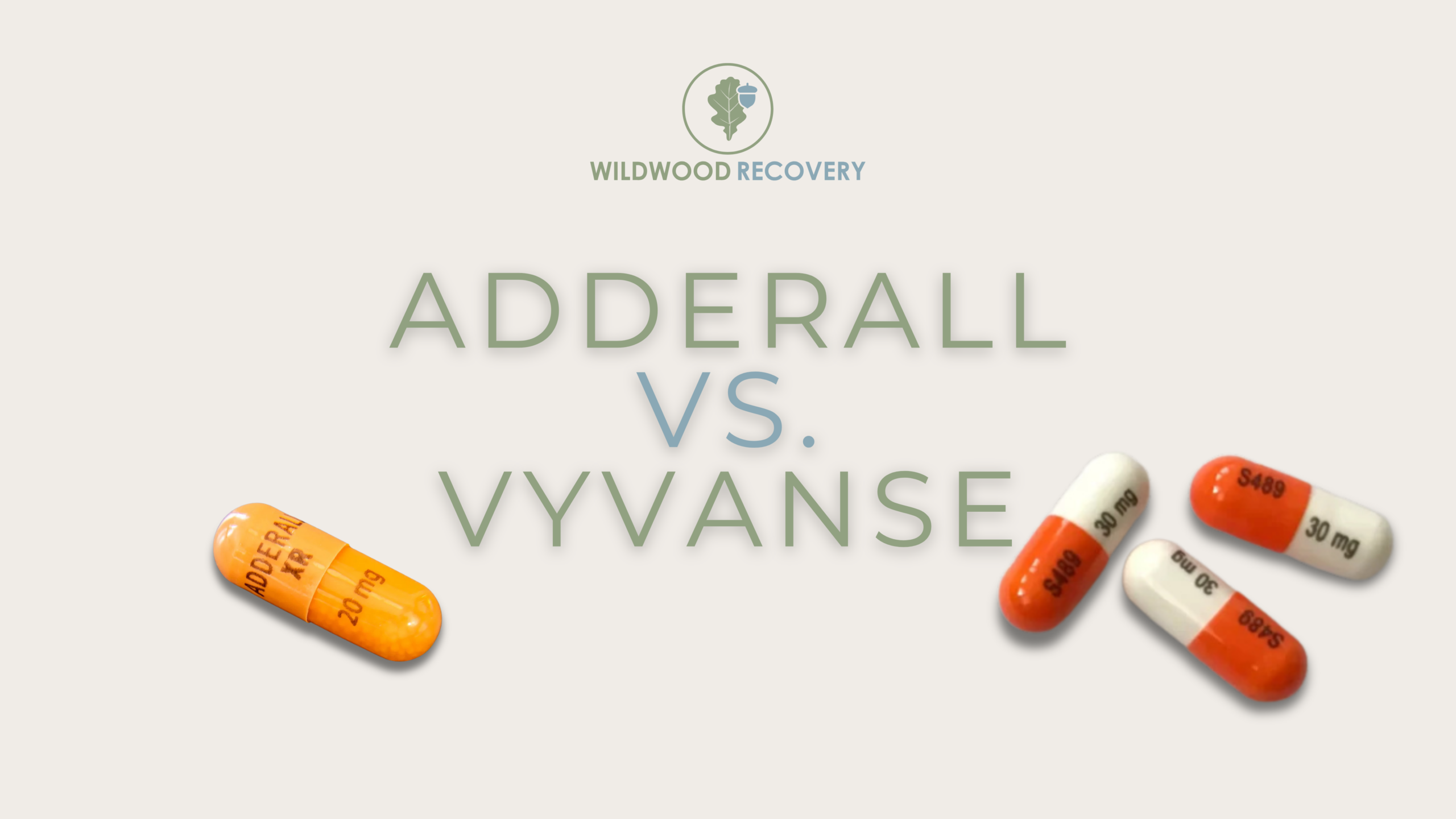
Adderall vs. Vyvanse: Differences, Effects, and Misuse Risks
Adderall and Vyvanse are two medications commonly prescribed to treat attention deficit hyperactivity disorder, often called ADHD. Because they are both stimulant medications, many people assume they work the same way or are interchangeable.
In reality, there are important differences between Adderall and Vyvanse. These differences include how the medications are processed in the body, how quickly they take effect, how long they last, and how they may affect misuse potential.
Adderall vs. Vyvanse at a Glance
What Is Adderall?
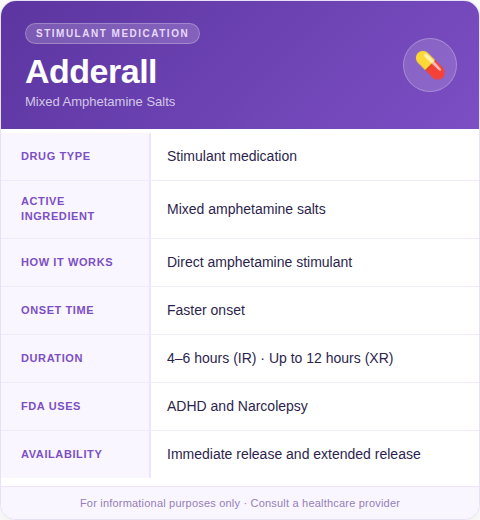
Adderall is a prescription stimulant medication made from a combination of amphetamine salts. It works by increasing the levels of certain neurotransmitters in the brain, primarily dopamine and norepinephrine. These neurotransmitters help regulate focus, impulse control, and attention.
Adderall is available in two main forms:
- immediate release tablets that typically last several hours
- extended release capsules designed to last most of the day
Because immediate release versions take effect quickly, they may produce noticeable stimulant effects soon after being taken.
What Is Vyvanse?
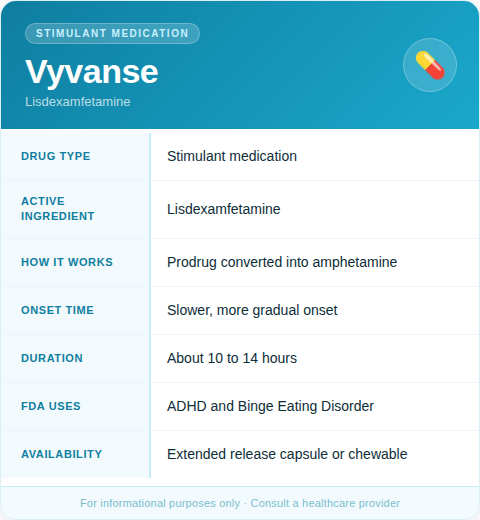
Vyvanse contains lisdexamfetamine, which is a prodrug. This means the medication itself is inactive until the body converts it into its active form. After Vyvanse is absorbed into the bloodstream, enzymes in the body gradually convert it into dextroamphetamine.
This process creates a slower and more controlled release of the stimulant compared to medications that contain active amphetamine directly. Because of this design, Vyvanse tends to produce a smoother onset and longer duration of effect.
Key Differences Between Adderall and Vyvanse
Although both medications treat ADHD, their formulation creates several practical differences.
How Quickly They Work
- Adderall usually begins working more quickly because it already contains active amphetamine.
- Vyvanse must first be converted into its active form, which creates a slower onset.
Duration of Effects
- Vyvanse is designed to last most of the day, often 10 to 14 hours.
- Adderall’s duration depends on the formulation:
- immediate release versions last about 4 to 6 hours
- extended release versions may last up to 12 hours
Misuse Potential
- Because Vyvanse must be metabolized before becoming active, it was developed partly to reduce misuse potential. Crushing or injecting Vyvanse does not produce an immediate stimulant effect because the body still must convert it to amphetamine.
- Adderall contains active stimulant compounds and may produce stronger effects more quickly when misused.
Adderall vs Vyvanse Side Effects
Both medications can cause similar side effects because they belong to the same class of stimulant drugs.
Common side effects may include:
- decreased appetite
- difficulty sleeping
- increased heart rate
- dry mouth
- anxiety or irritability
- headaches
Side effects can vary depending on dosage, individual health factors, and how the medication is taken.
Adderall vs Vyvanse for ADHD Treatment
For many patients, both medications can be effective for managing ADHD symptoms. Doctors consider several factors when deciding which medication to prescribe, including:
- how long symptom control is needed each day
- individual response to stimulant medications
- side effect profile
- medical history
Because every person responds differently to medication, some individuals find one option works better for them than the other.
Risks of Misusing Stimulant Medications
Prescription stimulants can be helpful when taken as directed, but misuse can lead to serious health risks.
Misuse may include:
- taking higher doses than prescribed
- using medication without a prescription
- crushing or altering the medication
- combining it with other substances
Possible risks of stimulant misuse include:
- heart problems
- anxiety and agitation
- insomnia
- dependency
- substance use disorders
Because stimulant medications increase dopamine levels in the brain, they can produce reinforcing effects when misused.
Stimulants and Substance Use Concerns
Some people begin using stimulant medications to improve focus or academic performance without a prescription. Over time, this pattern can lead to dependence or misuse. When stimulant misuse occurs alongside other substances such as alcohol or illicit drugs, the health risks may increase. Professional treatment programs can help individuals address stimulant misuse and develop healthier coping strategies.
Final Thoughts
Adderall and Vyvanse are both stimulant medications used to treat ADHD, but they differ in how they are formulated, how quickly they work, and how long their effects last. Adderall contains active amphetamine salts that take effect relatively quickly, while Vyvanse must be metabolized into its active form, creating a slower and more gradual release. Understanding these differences can help patients and healthcare providers choose the medication that best supports symptom management while minimizing risks.
Frequently Asked Questions About Vyvanse and Adderall
Is Vyvanse stronger than Adderall?
Both medications contain amphetamine based stimulants, but they are formulated differently. Vyvanse converts into its active form slowly, while Adderall contains active amphetamine that works more quickly.
Does Vyvanse last longer than Adderall?
Vyvanse typically lasts about 10 to 14 hours, while Adderall’s duration depends on the formulation. Immediate release versions last around 4 to 6 hours and extended release versions may last up to 12 hours.
Why do doctors prescribe Vyvanse instead of Adderall?
Vyvanse provides a longer and smoother release of stimulant medication, which may help some patients avoid sharp peaks and crashes during the day.
Is Adderall more likely to be misused?
Because Adderall contains active stimulant compounds that work quickly, it may have a higher misuse potential compared to medications that must be metabolized first.
Can you switch from Adderall to Vyvanse?
Doctors sometimes switch patients between stimulant medications if side effects occur or if symptom control is not adequate. Any medication change should always be done under medical supervision.
Sources
-
Benson, K., Flory, K., Humphreys, K. L., & Lee, S. S. (2015). Misuse of stimulant medication among college students: a comprehensive review and meta-analysis. Clinical Child and Family Psychology Review, 18(1), 50–76. https://pubmed.ncbi.nlm.nih.gov/25295651/
-
Goodman, D. W. (2010). Lisdexamfetamine dimesylate (Vyvanse), a prodrug stimulant for attention-deficit/hyperactivity disorder. Pharmacy and Therapeutics, 35(5), 273–287. https://pmc.ncbi.nlm.nih.gov/articles/PMC2873712/
-
Hegvik, T. A., Instanes, J. T., Haavik, J., Klungsøyr, K., & Engeland, A. (2025). Misuse and diversion of stimulant medications prescribed for the treatment of ADHD: a systematic review. Frontiers in Psychiatry. https://pmc.ncbi.nlm.nih.gov/articles/PMC12280905/
-
Nguyen, J., Bhatt, S., & Bhatt, D. (2021). Amphetamine. StatPearls. National Center for Biotechnology Information. https://www.ncbi.nlm.nih.gov/books/NBK556103/
-
Pennick, M. (2010). Absorption of lisdexamfetamine dimesylate and its hydrolysis to active d-amphetamine. Neuropsychiatric Disease and Treatment. https://pmc.ncbi.nlm.nih.gov/articles/PMC4823324/
-
U.S. Food and Drug Administration. (2023). Adderall (dextroamphetamine saccharate, amphetamine aspartate, dextroamphetamine sulfate, and amphetamine sulfate): Prescribing information. https://www.accessdata.fda.gov/drugsatfda_docs/label/2023/011522s045lbl.pdf
-
U.S. Food and Drug Administration. (2023). Adderall XR (mixed amphetamine salts): Prescribing information. https://www.accessdata.fda.gov/drugsatfda_docs/label/2023/021303s038lbl.pdf